|
|
Water is life, and like it we can choose to create abundance or simply watch it pass by
HYDROLOGY AT THE HEART OF TOPOGRAPHIC SURGERY
Earthworks by kangaroots-permaculture
(4 projects presented here, for now...from the latest to the older ones)
HYDROLOGY AT THE HEART OF TOPOGRAPHIC SURGERY
Earthworks by kangaroots-permaculture
(4 projects presented here, for now...from the latest to the older ones)
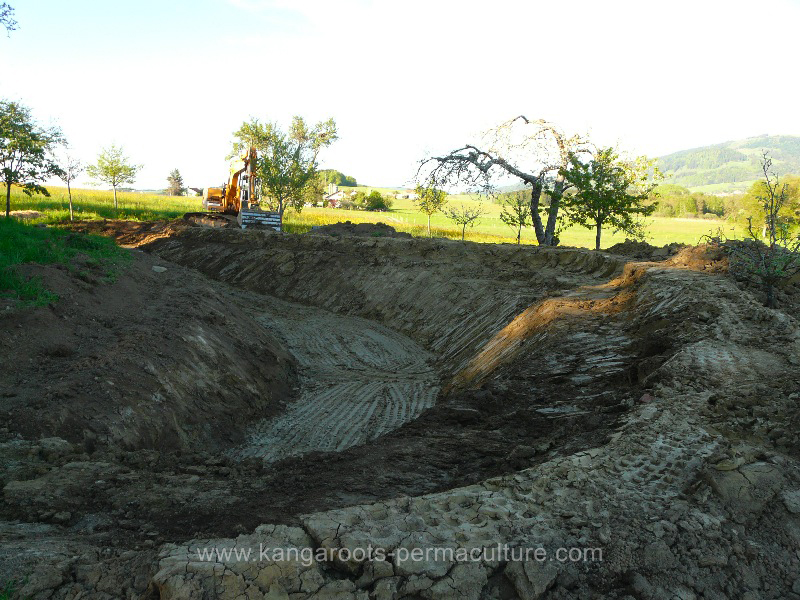
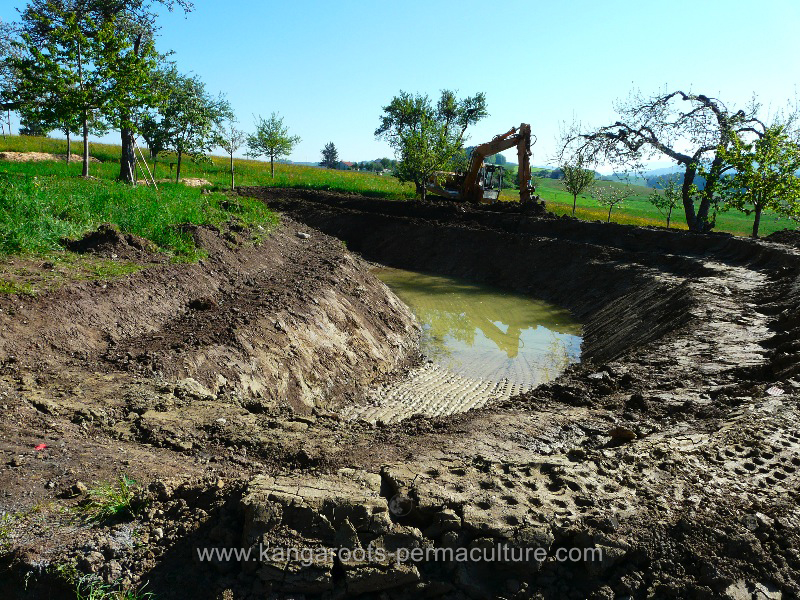
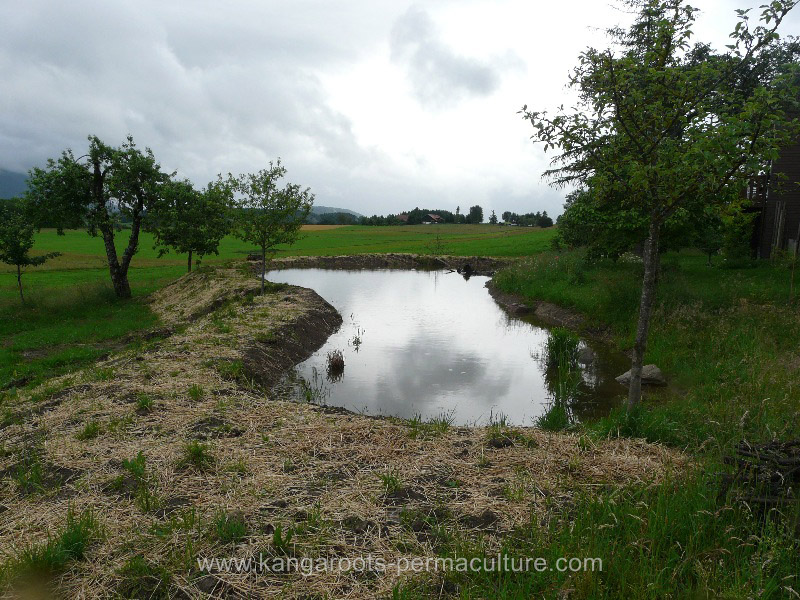
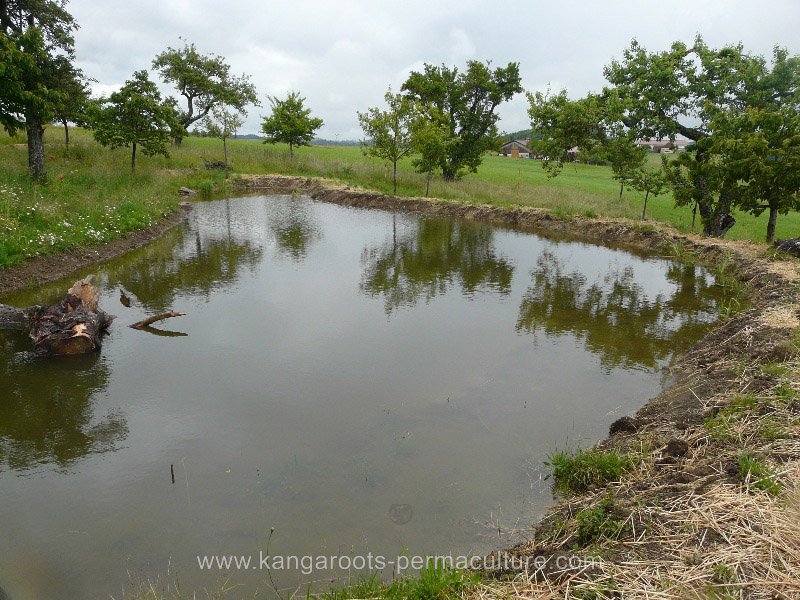
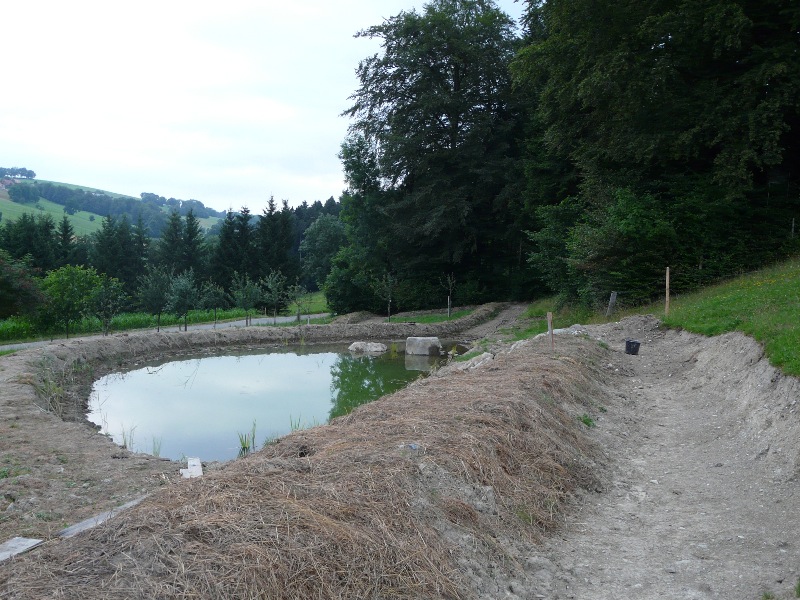
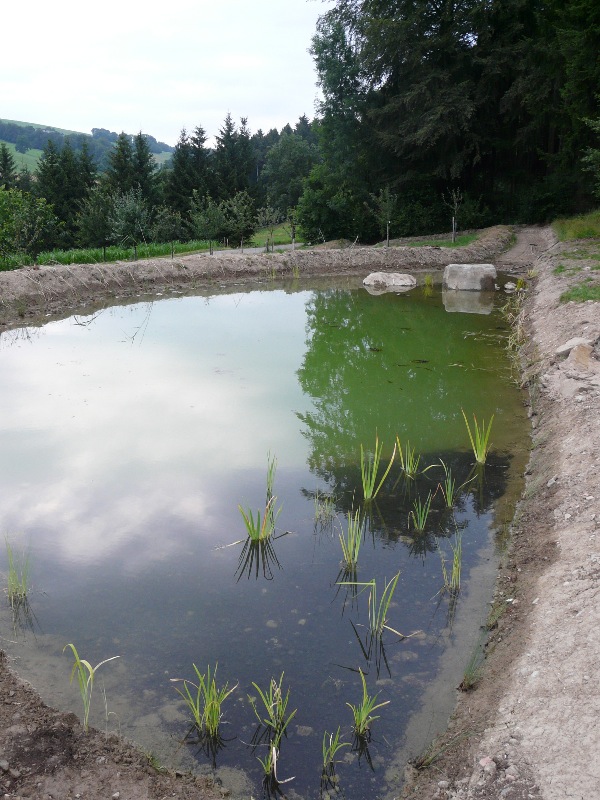
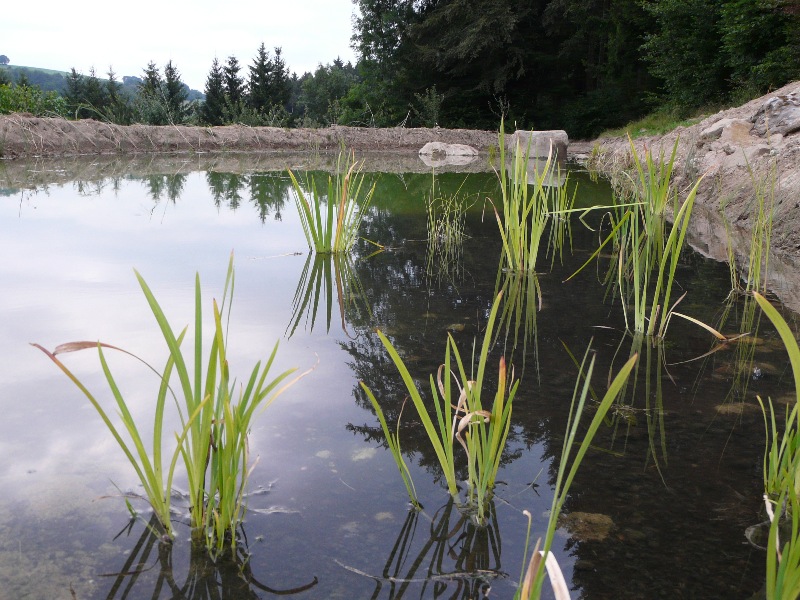
- A medium sized clay pond on a property in Jura - Switzerland June 2012 (Work For Client)
This project demonstrates :
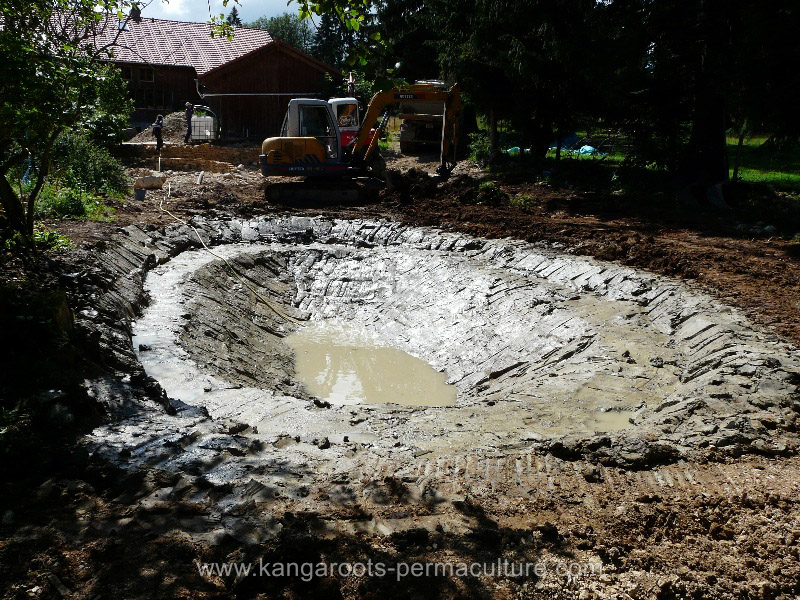
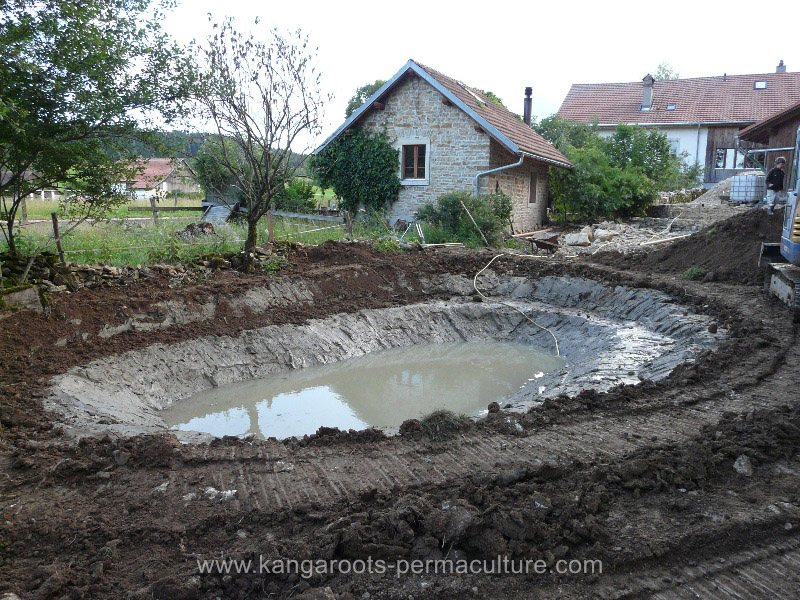
- A medium sized clay pond.
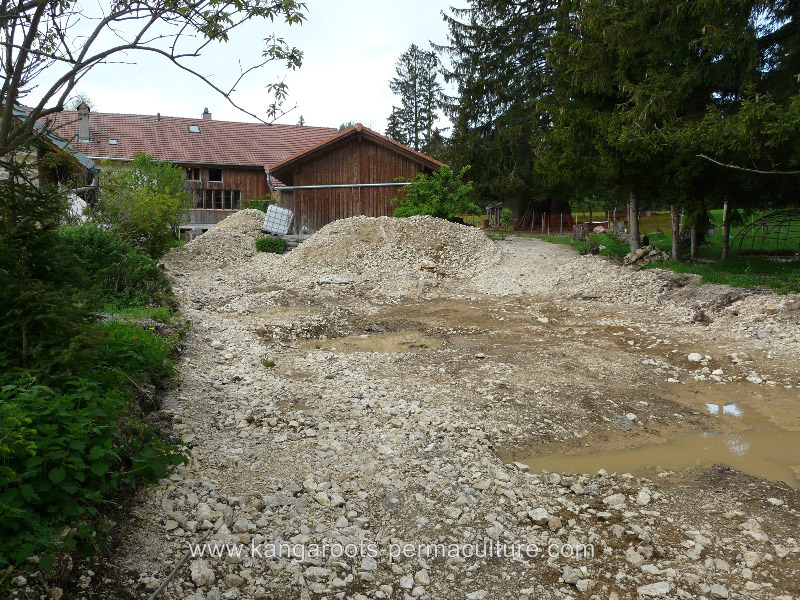
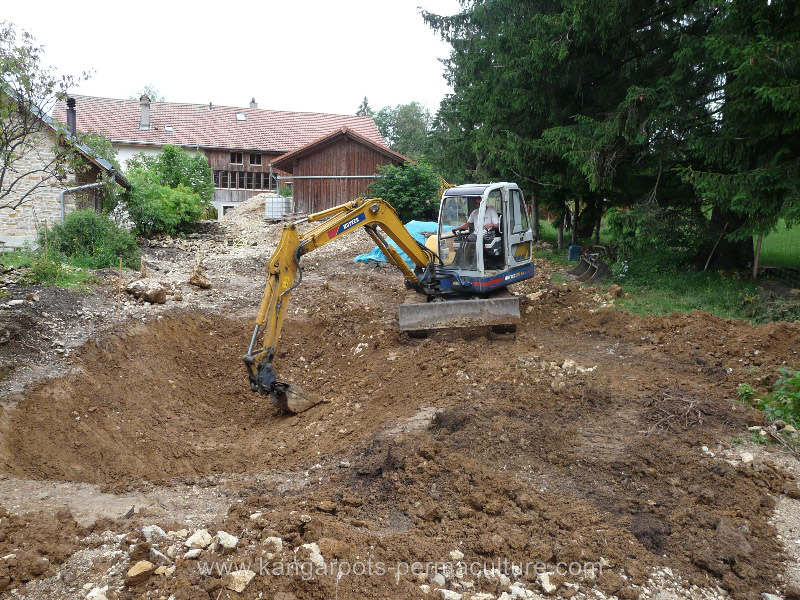
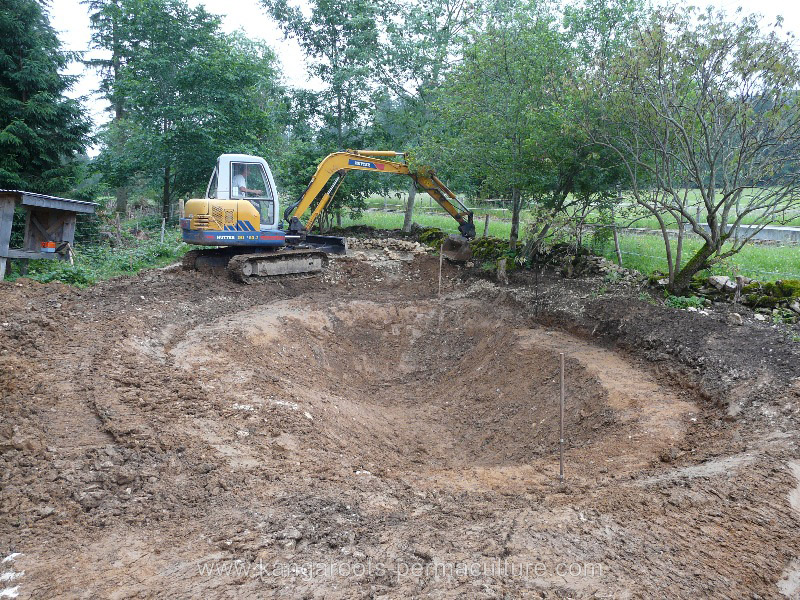
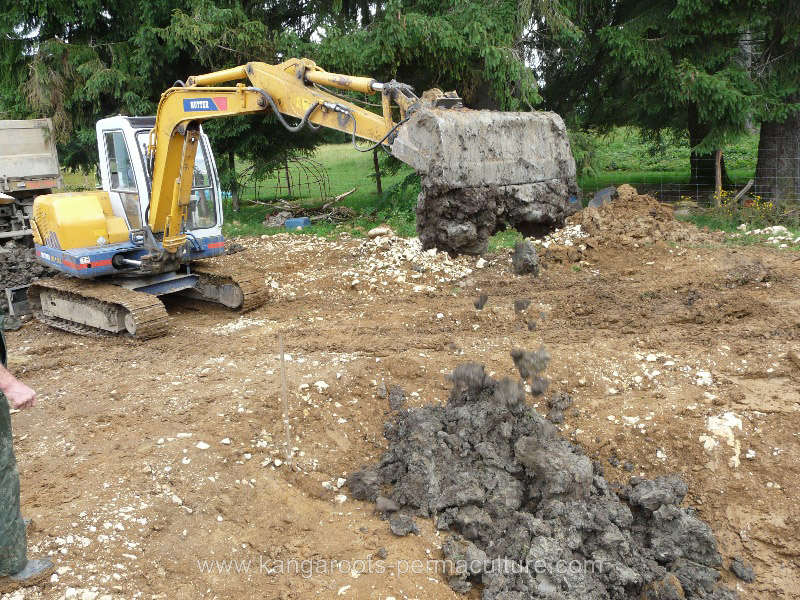
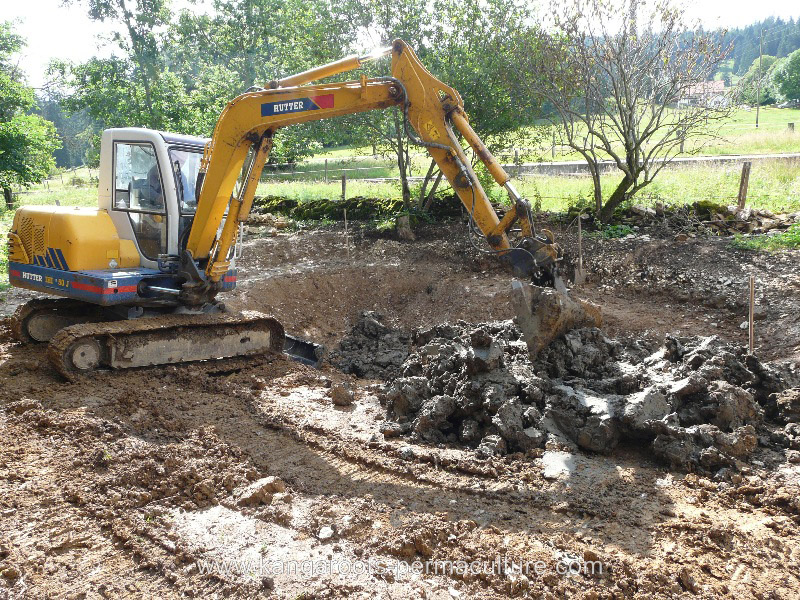
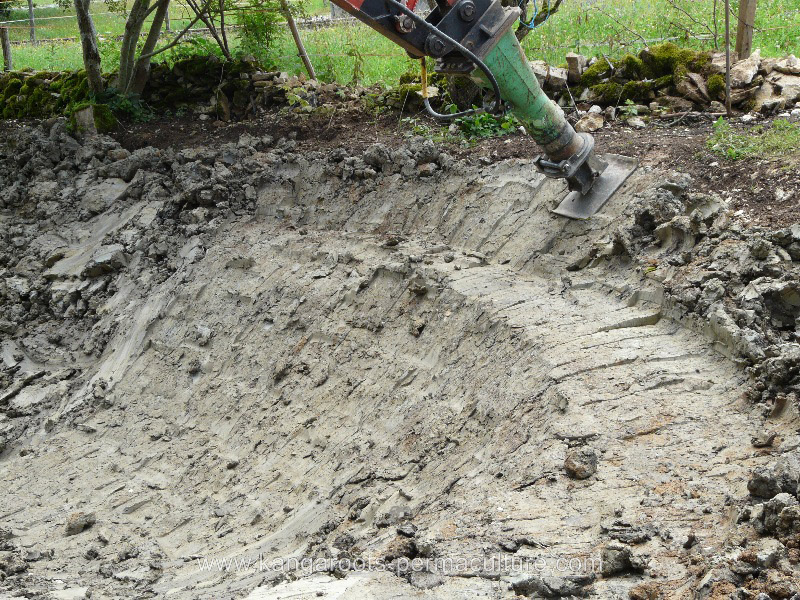
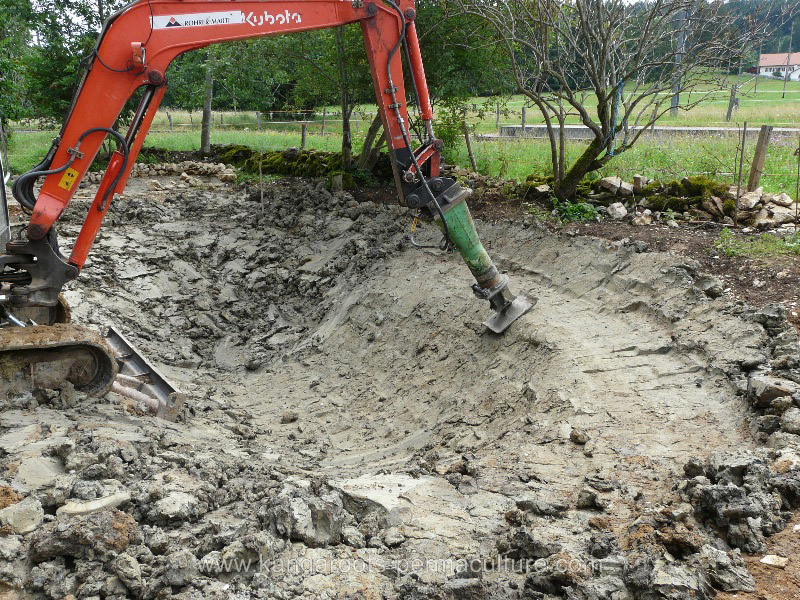
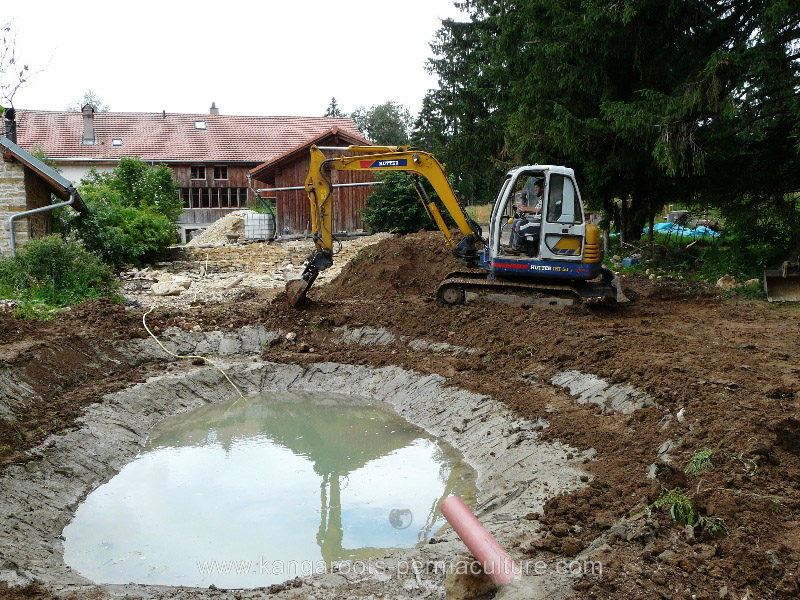
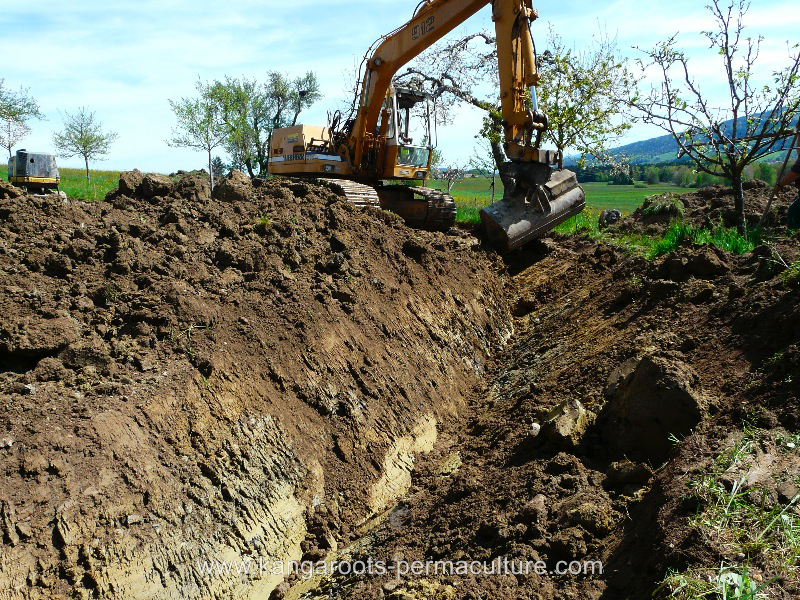
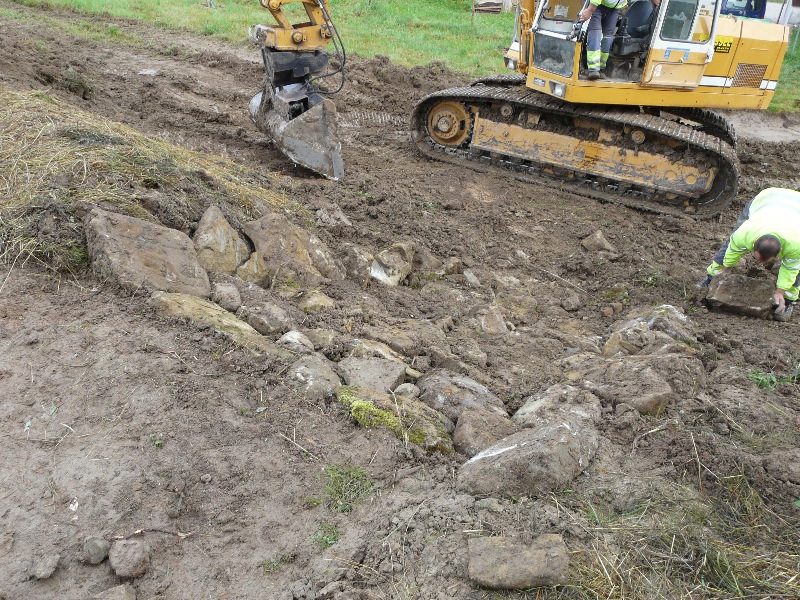
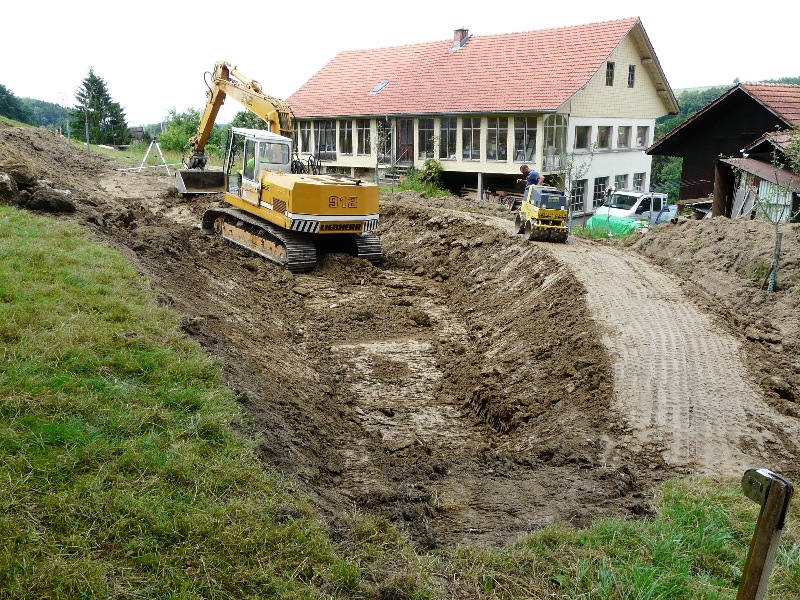
It's particularity is that it was constructed with imported clay as none was available on site. Neither I nor the client wanted to use a plastic lining.
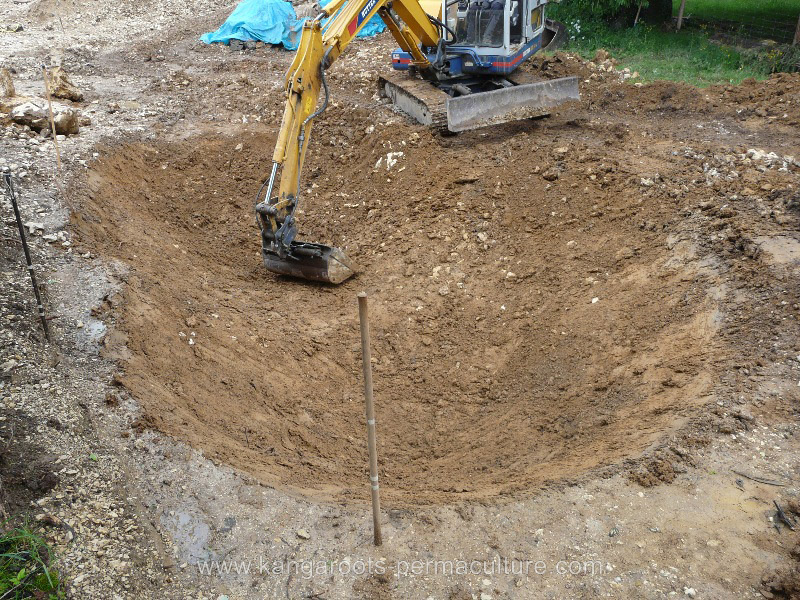
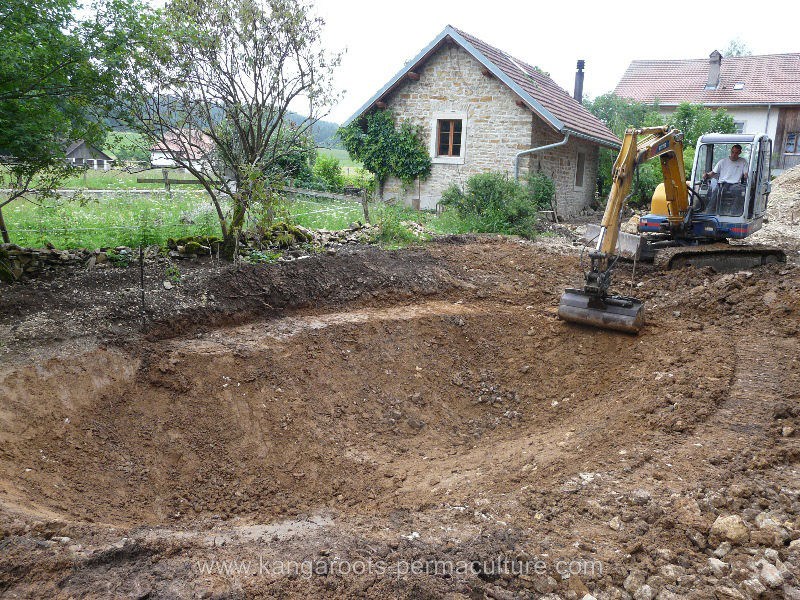
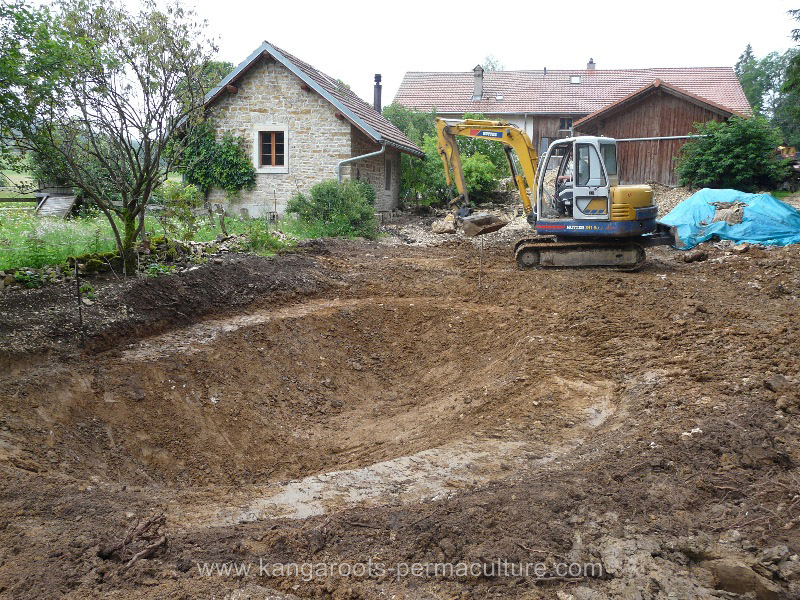
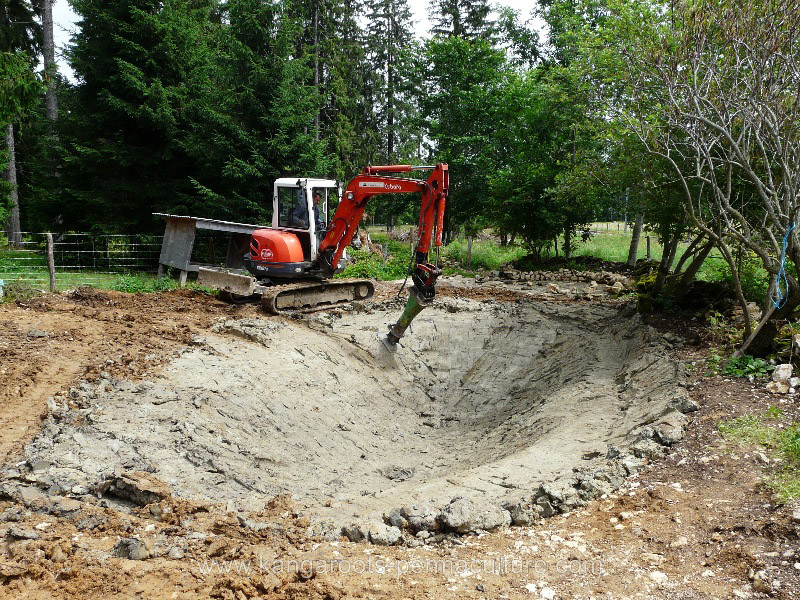
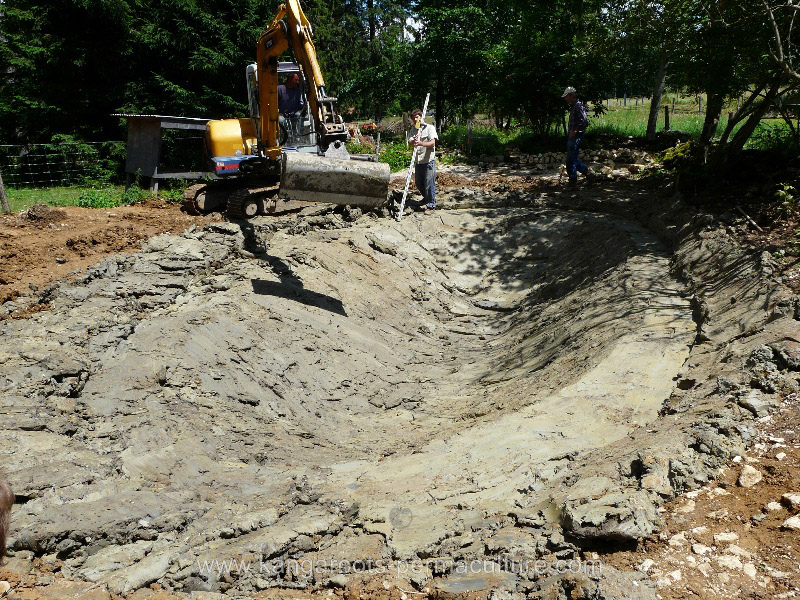
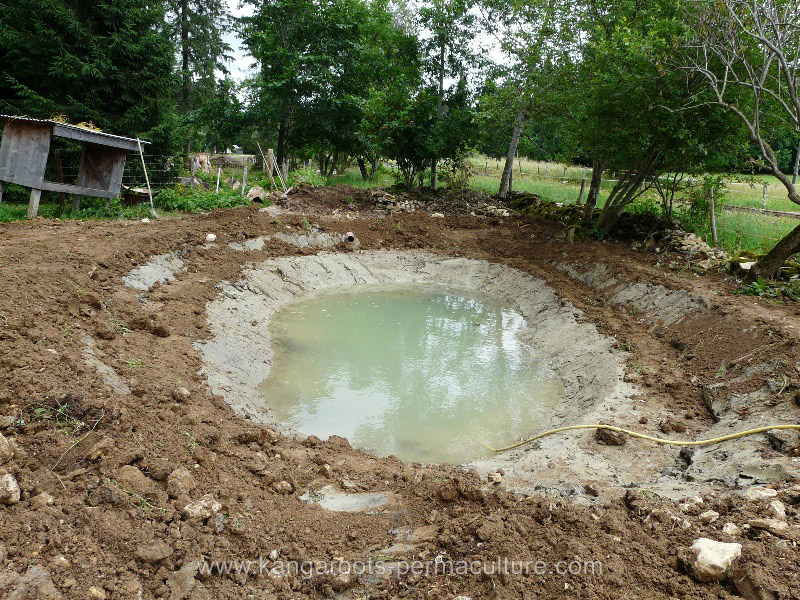
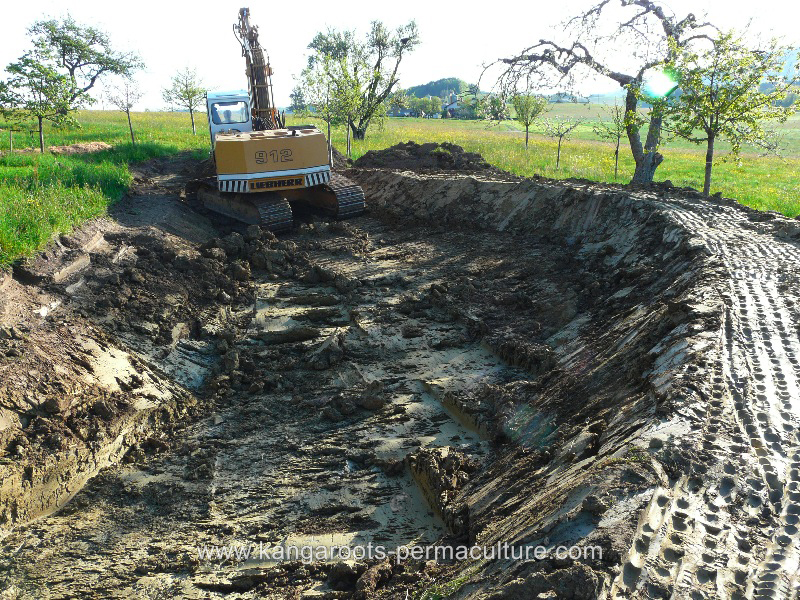
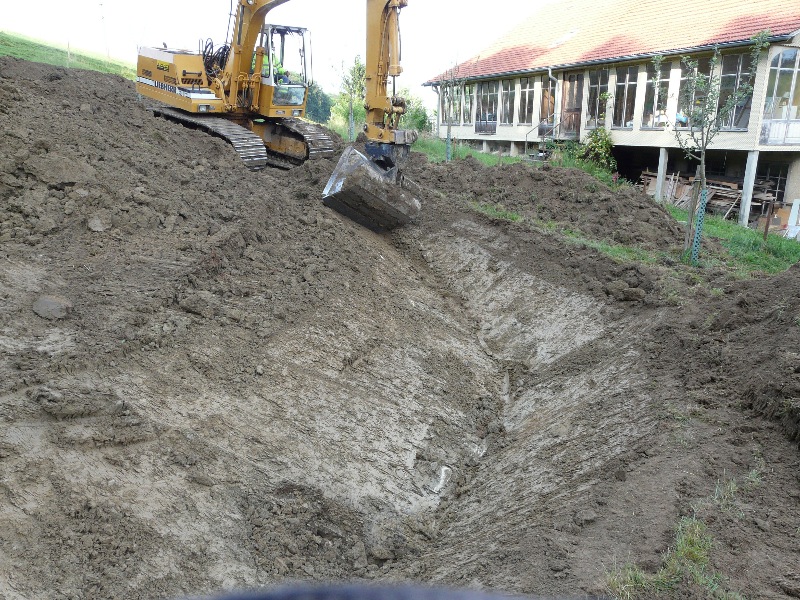
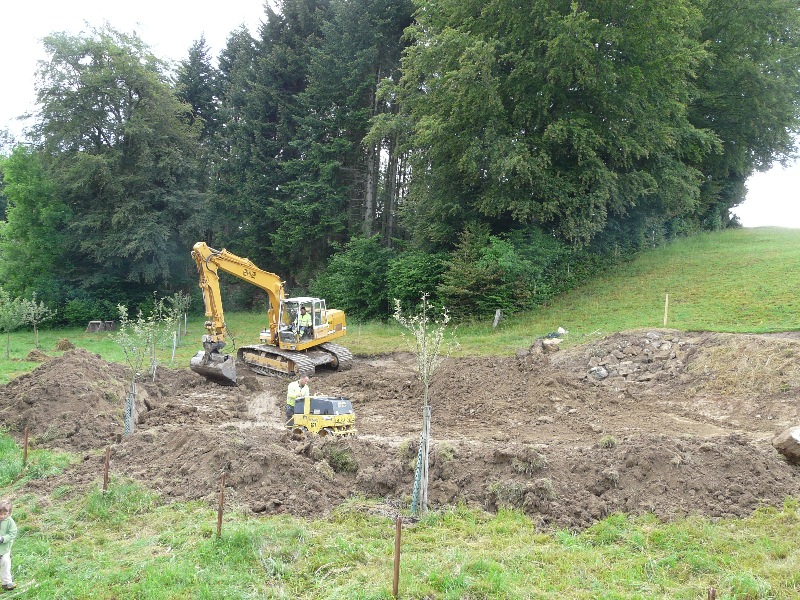
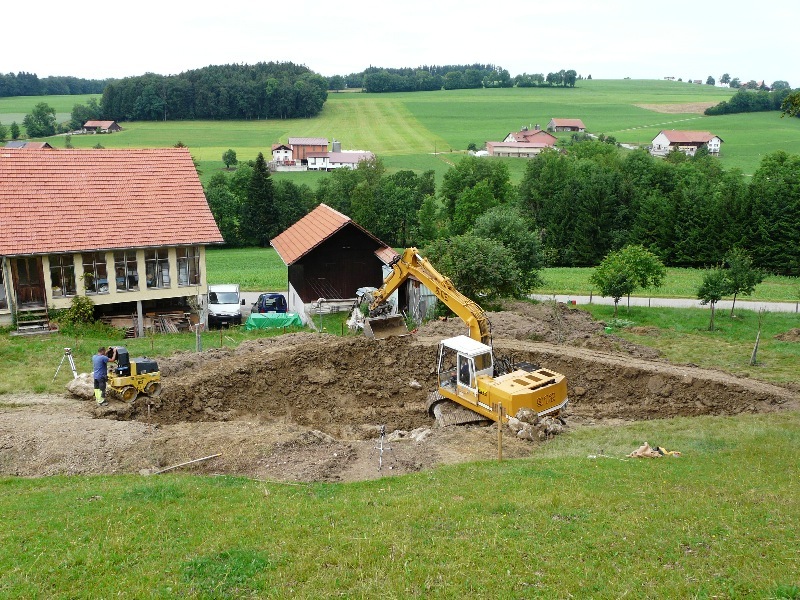
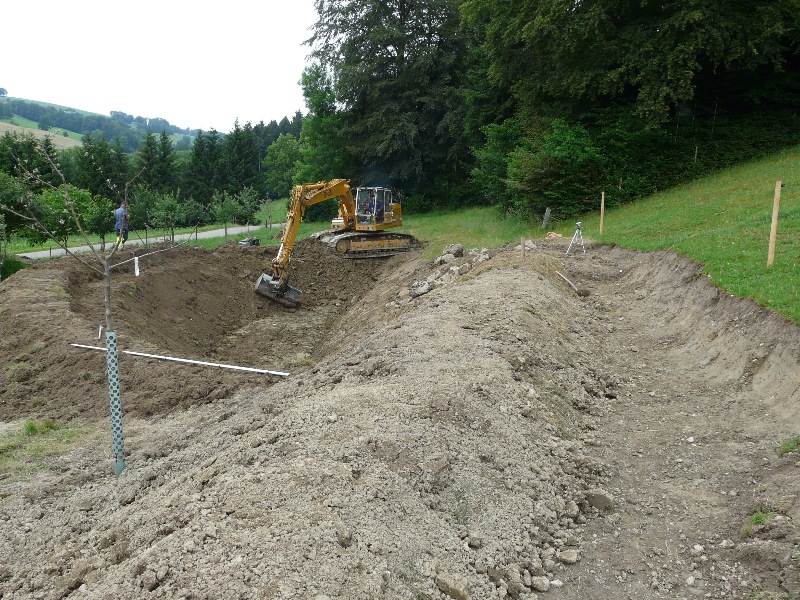
Around 20m3 of good clay material was brought in to cover the whole pond area with a 40cm layer of clay. The dam is approx. 8m in length and 6m wide, in a bean shape.
I had initially been contracted to draw a design for the pond and garden area and the owner was organising herself from there in and they began the project independantly, finally to contact me again to take over the job.
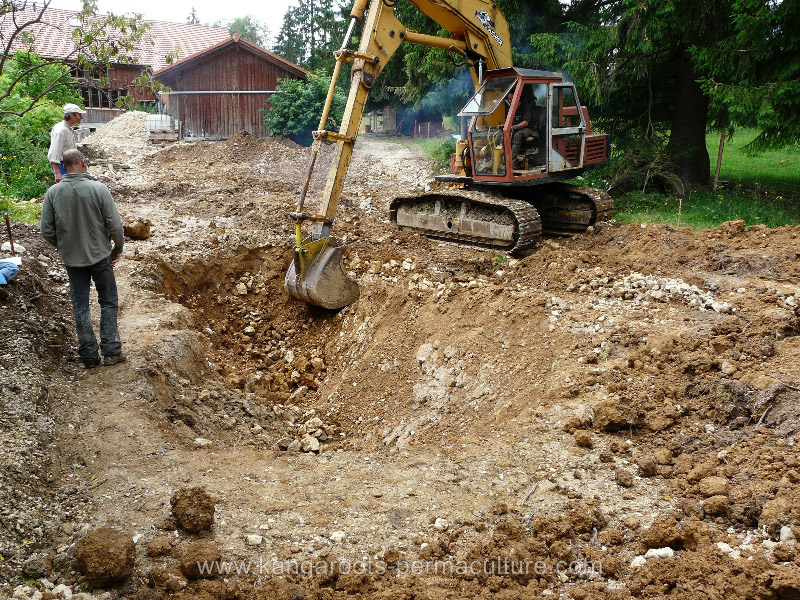
They had begun the work with an old inappropriate machine and had consequently came across problems.
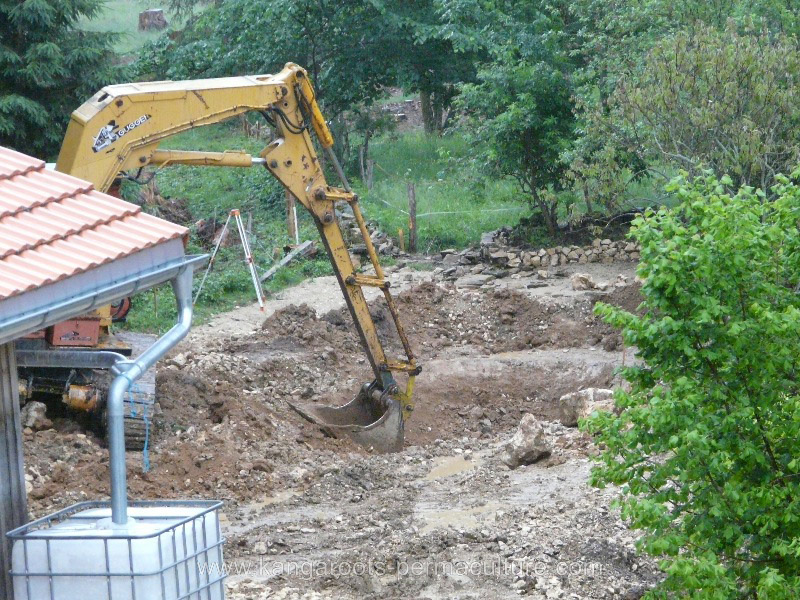
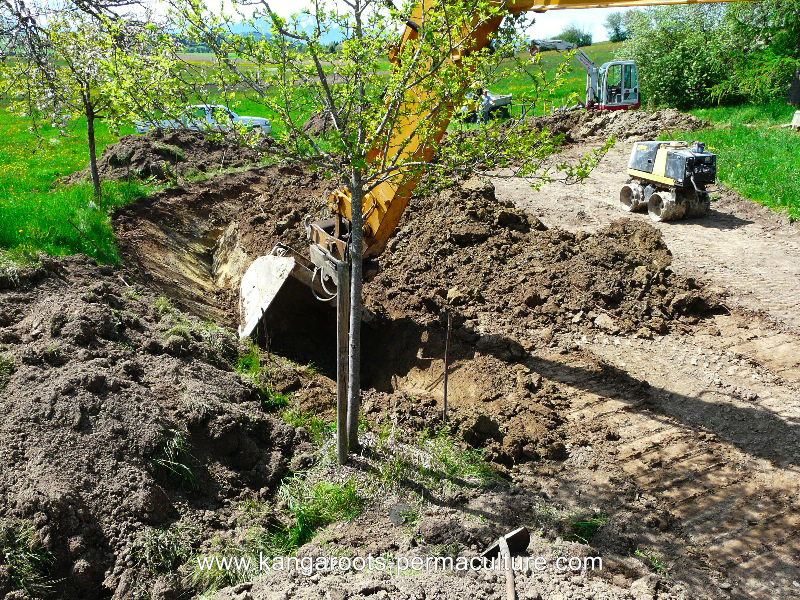
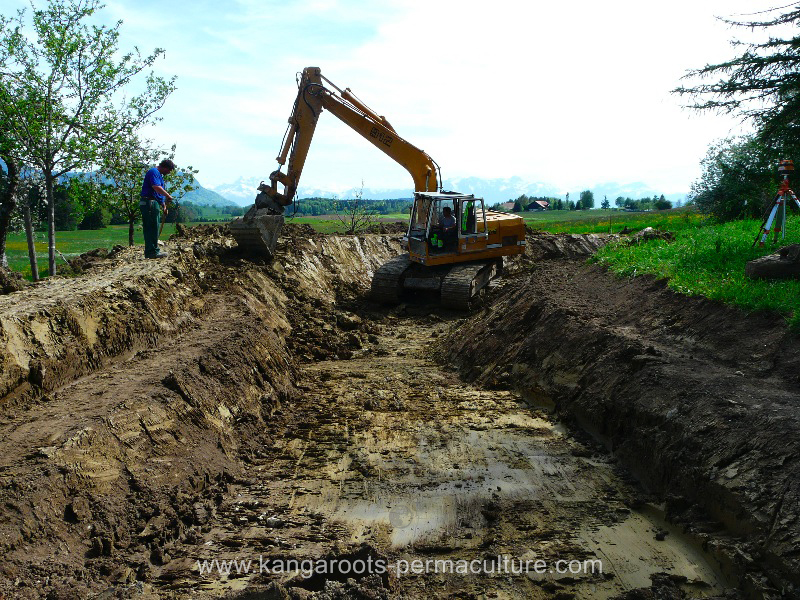
The proper machine for the job (initially advised) was brought in and we were able to finish the digging.
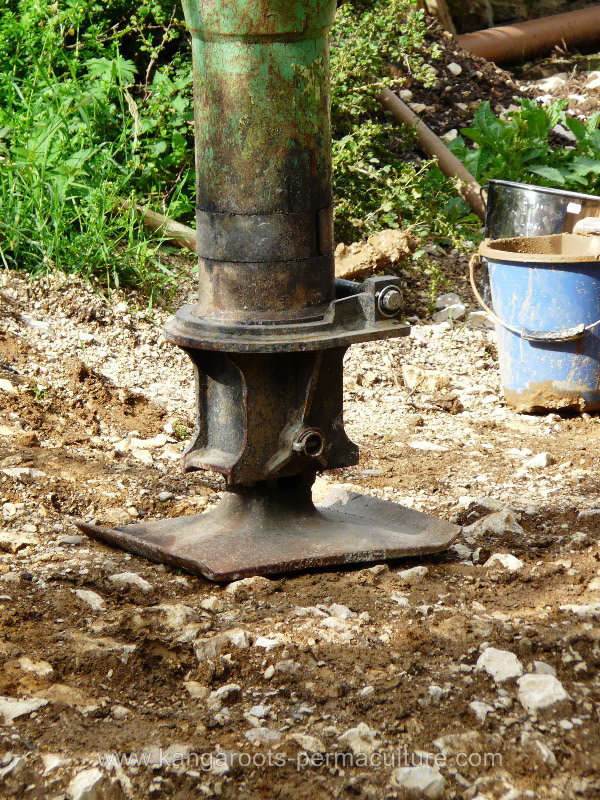
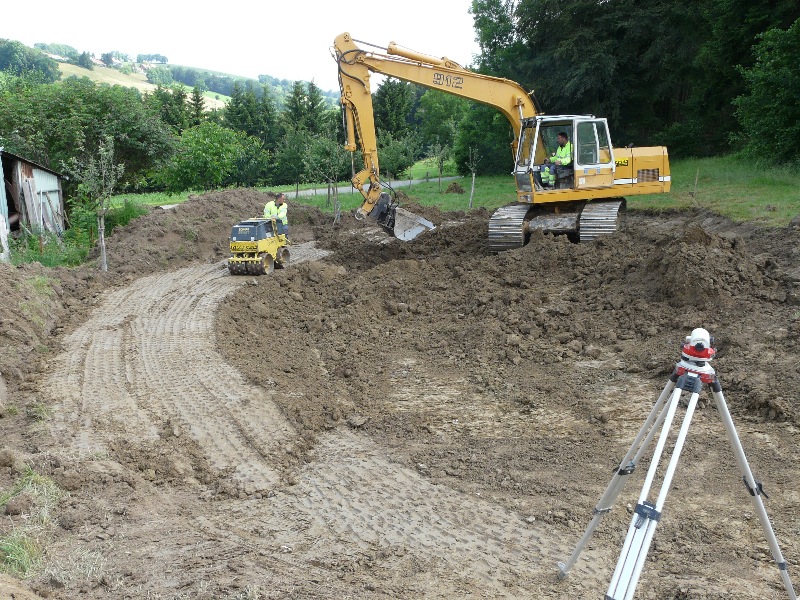
Another technical snag that came up was realizing that a vibrating plate was not going to do the job of compacting the soil sufficiently.
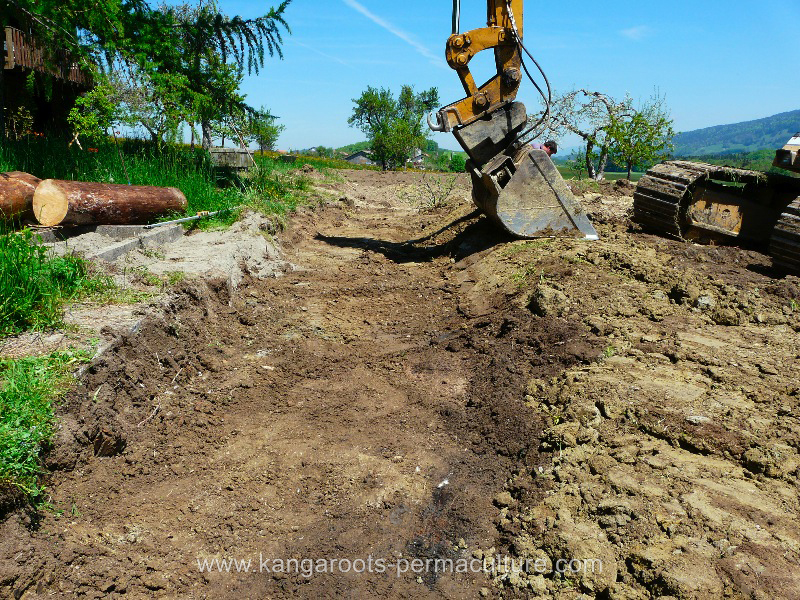
Various solutions were considered and finally we decided on a hammer that fitted on the escavator's arm. It quickly proved to be the tool required.
The dam was filled with water as quickly as possible to prevent drying and cracking of the clay due to sun and wind exposure.
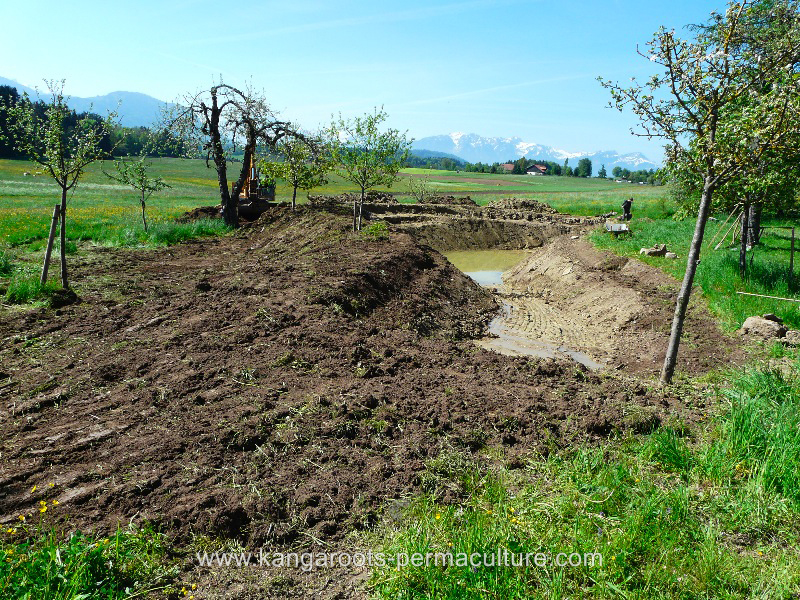
Topsoil was placed (10-15cm) over the whole dam rim. The client immediately cast cover crop over the whole surface to begin regeneration.
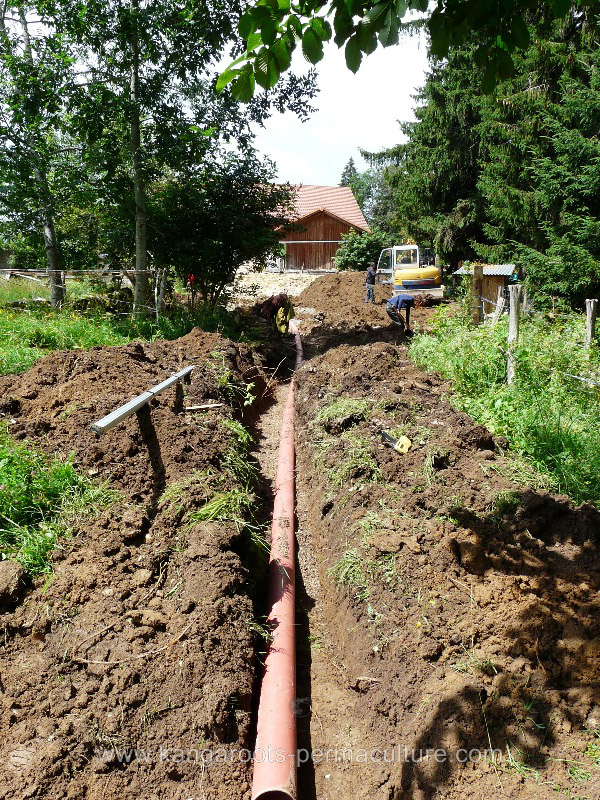
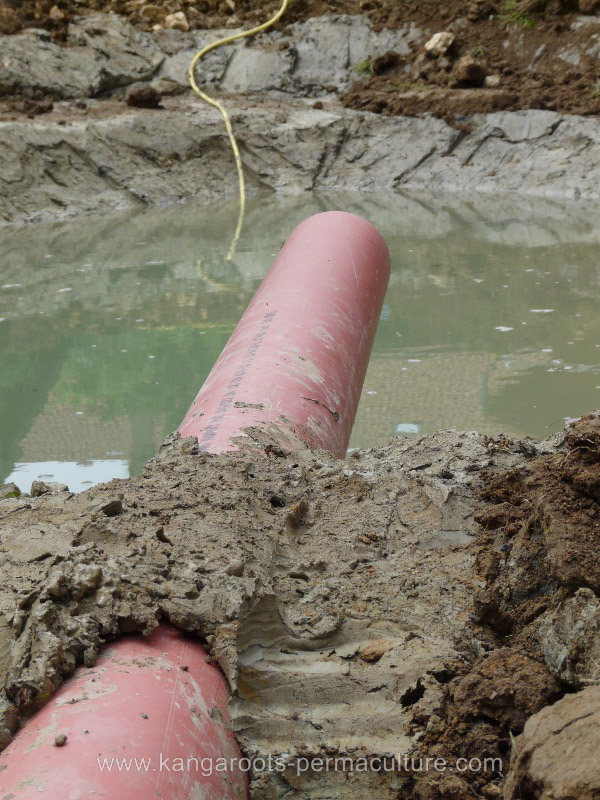
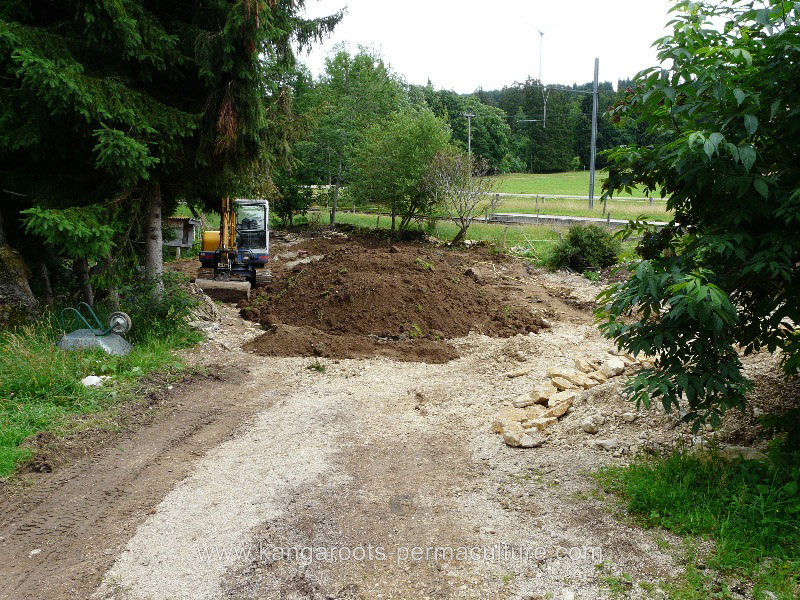
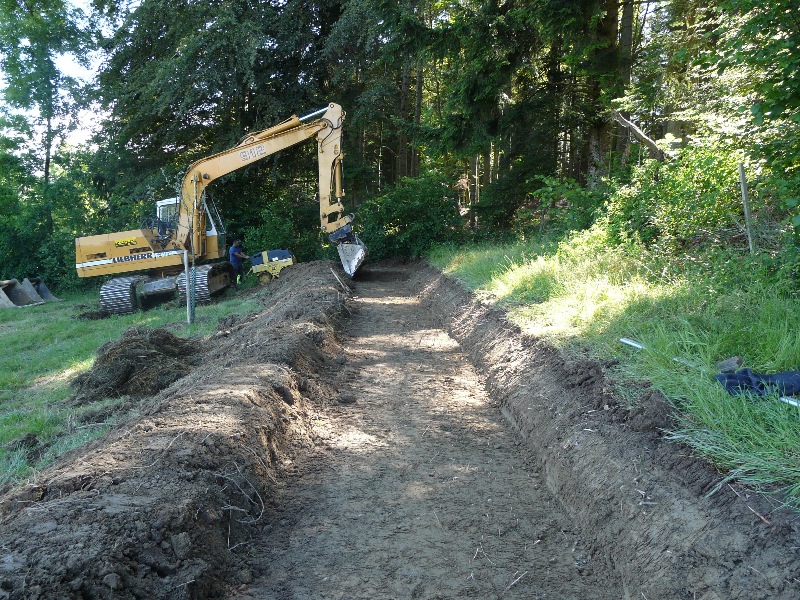
An overflow drain was then dug to allow for the pond spillway and this completed the pond project for me.
Aquatic plants will be planted alond the sill area and natural evolution will take over, creating a new ecosystem.
The whole area surrounding the pond will be gradually transformed into a fruit and veggie garden.
Click on photos to enlarge and read comments.
- A medium sized clay pond.
It's particularity is that it was constructed with imported clay as none was available on site. Neither I nor the client wanted to use a plastic lining.
Around 20m3 of good clay material was brought in to cover the whole pond area with a 40cm layer of clay. The dam is approx. 8m in length and 6m wide, in a bean shape.
I had initially been contracted to draw a design for the pond and garden area and the owner was organising herself from there in and they began the project independantly, finally to contact me again to take over the job.
They had begun the work with an old inappropriate machine and had consequently came across problems.
The proper machine for the job (initially advised) was brought in and we were able to finish the digging.
Another technical snag that came up was realizing that a vibrating plate was not going to do the job of compacting the soil sufficiently.
Various solutions were considered and finally we decided on a hammer that fitted on the escavator's arm. It quickly proved to be the tool required.
The dam was filled with water as quickly as possible to prevent drying and cracking of the clay due to sun and wind exposure.
Topsoil was placed (10-15cm) over the whole dam rim. The client immediately cast cover crop over the whole surface to begin regeneration.
An overflow drain was then dug to allow for the pond spillway and this completed the pond project for me.
Aquatic plants will be planted alond the sill area and natural evolution will take over, creating a new ecosystem.
The whole area surrounding the pond will be gradually transformed into a fruit and veggie garden.
Click on photos to enlarge and read comments.
- 2 swales and a dam on a property in La Veveyse - Switzerland may 2012
(Work For Client)
After waiting 8 months for state approval, a 2nd dam was put in place in May 2012 in the same village (as the June 2011 earthwork presented next.)
The completed project demonstrates :
2 *swales (see below) and an Earth Dam (see photos below the text.)
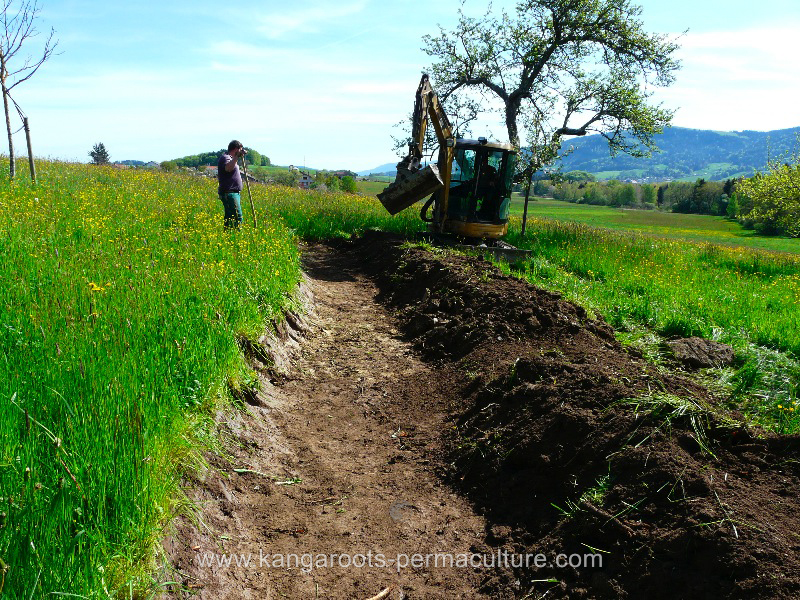
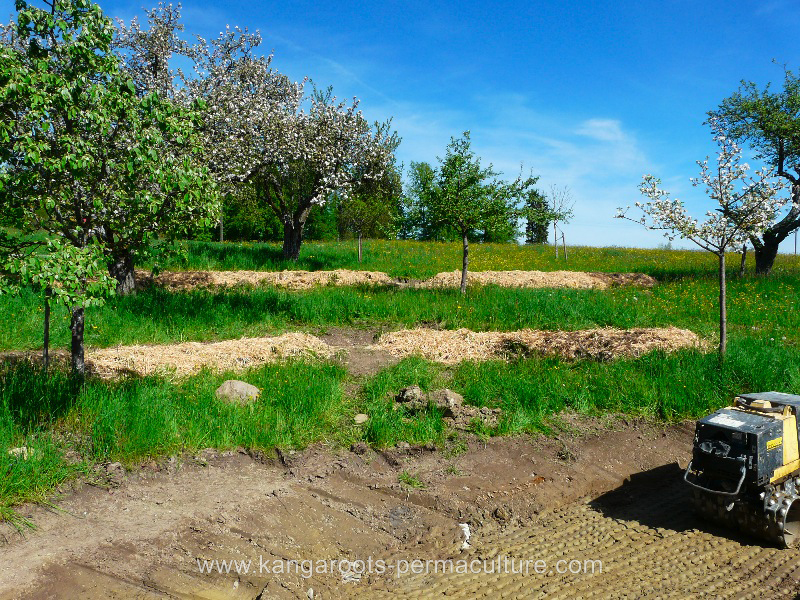
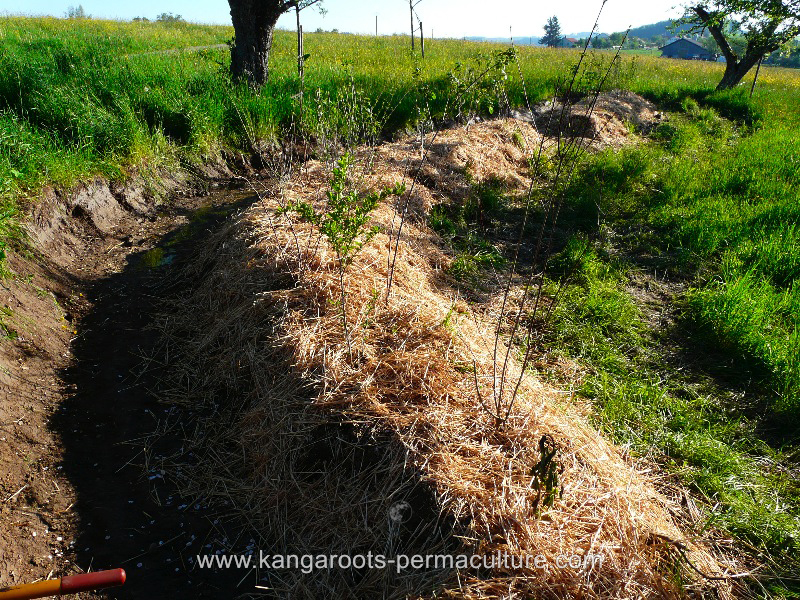
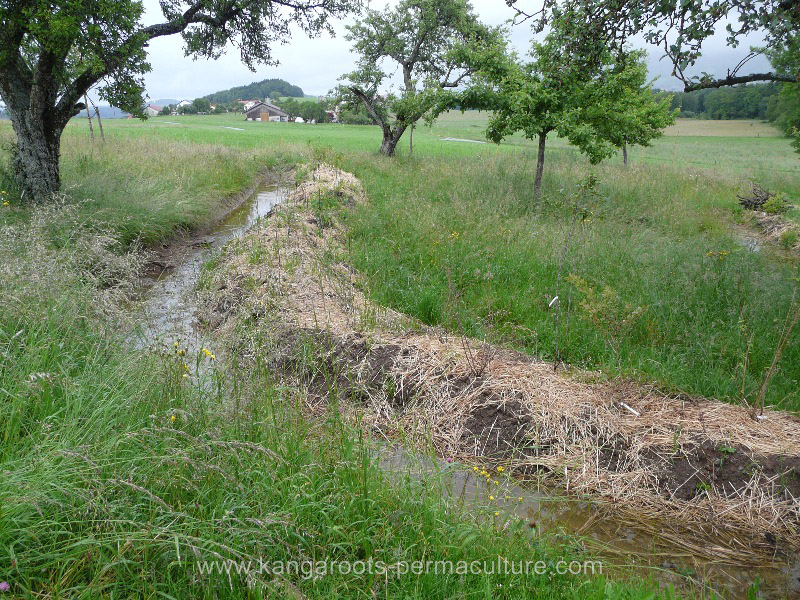
The uphill swale is 18m long with a 15cm holding capacity before overflowing over a level sill spillway through the mound of the swale. The swale will be fed by an old broken underground drain and the rainwater runoff from the road.
The downhill swale measures 10m in length and receives the overflow from the uphill swale. It's holding capacity before overflowing is 10cm and it also overflows over a level sill spillway through the centre of the mound. This mini swale serves as a silt trap for the dam below.
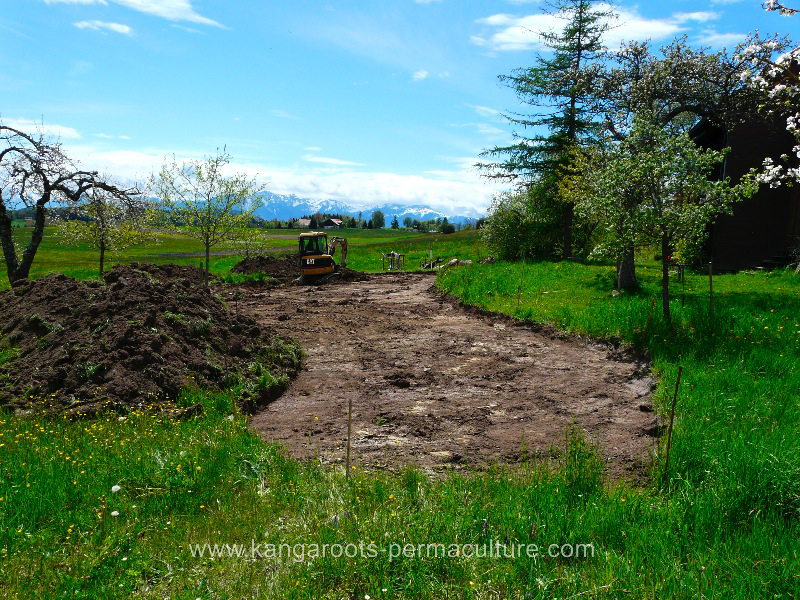
The dam is 30m by 9m (water surface), the deepest point at the centre is 170cm.
A step was dug around the interior rim to allow for planting which is 5cm below the spillway of the dam. The spillway is 13m long and runs into a small stream. It is the spillway that sets the maximum level of water in the dam. This spillway must remain free of all obstacles, thus allowing the water to freely flow out.
The dam has a freeboard of 50cm in height which permits an additional holding capacity of water, thus allowing time for water to disperse in case of a "hundred year“ type storm.
Water must never spill over the wall of a dam.
The dam has a water retention capacity of about 100,000lt. It will be filled by the infiltration of water from the swales uphill as well as by the broken drain which is filling up the first swale.
The two swales were dug with a 6 tonne excavator and the dam with a 26 tonne excavator. The compacting of the dam wall was done with a sheep roller. It took 4 days to complete the earthwork.
All of the ground cover that was cast seeded after the earthwork were inoculated with rhyzobium bacterias.
For the groundcover of the swales bird's-foot trefoil, lupin, luzern, sainfoin, clover and melilot were cast. Although not legumes pumpkins, nasturtium, lemon balm and garden orache were also planted.
On the dam wall luzern, clover and sainfoin were planted.
*swale :
A swale is a trench dug level, following the contour of the land. Its aim is to allow passive accumulation and infiltration of rain water and water run off through the land.
A swale is a system used to rehydrate the land through hydrologic redistribution. Water is deeply absorbed into the ground along the entire length of the swale and thus benefits all the systems placed below.
A swale is a structure for tree planting, allowing accelerated growth of the trees (hedgerow, forest, food forest,…) as well as providing for its own physical stability.
A swale is one of the system of initial groundwork in the landscape’s accelerated regeneration and reforestation.
This applies to a small piece of land as well as an entire region.
Click on photos to enlarge and read comments.
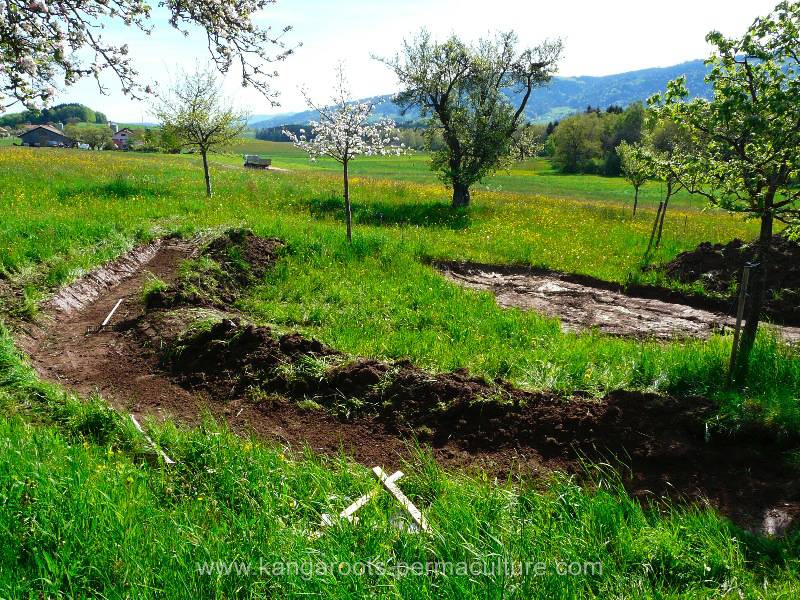
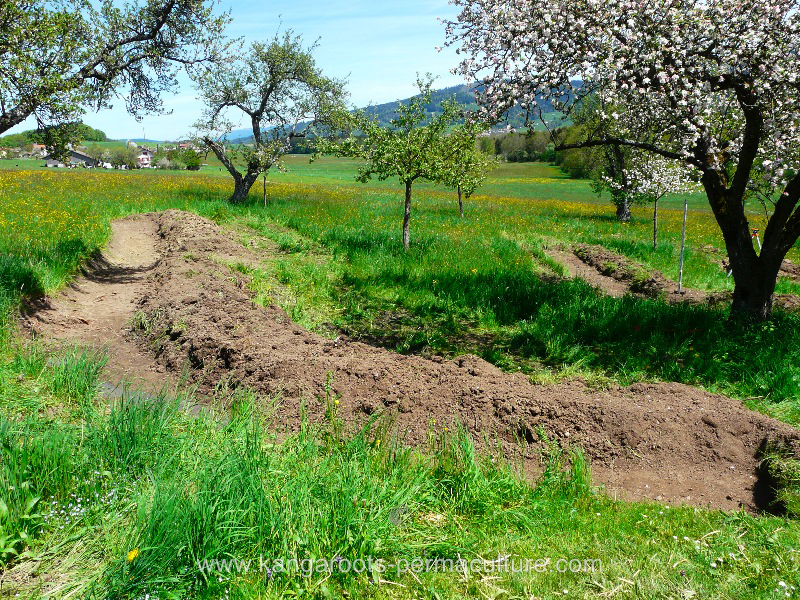
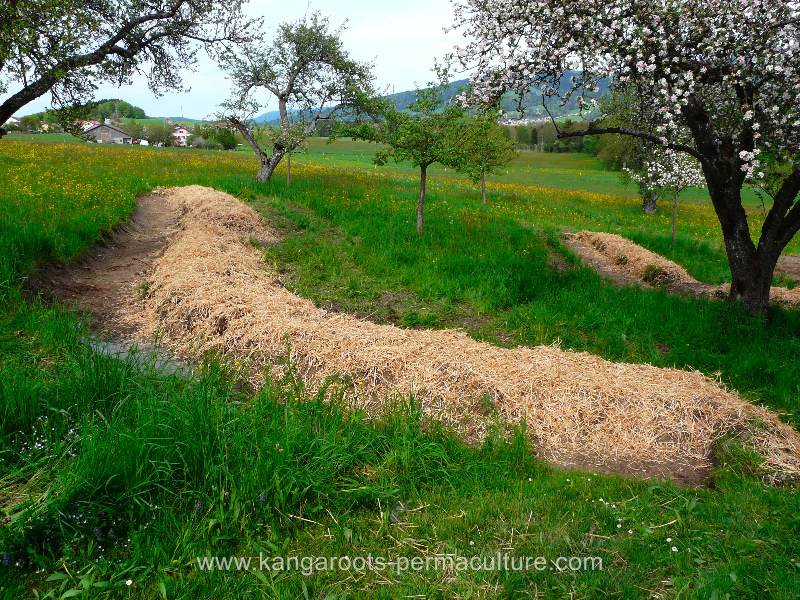
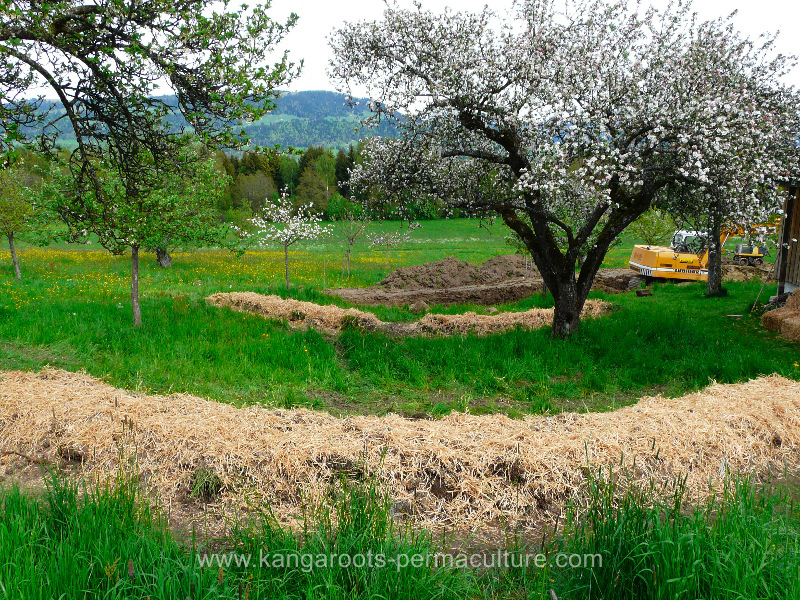
The swales...
The completed project demonstrates :
2 *swales (see below) and an Earth Dam (see photos below the text.)
The uphill swale is 18m long with a 15cm holding capacity before overflowing over a level sill spillway through the mound of the swale. The swale will be fed by an old broken underground drain and the rainwater runoff from the road.
The downhill swale measures 10m in length and receives the overflow from the uphill swale. It's holding capacity before overflowing is 10cm and it also overflows over a level sill spillway through the centre of the mound. This mini swale serves as a silt trap for the dam below.
The dam is 30m by 9m (water surface), the deepest point at the centre is 170cm.
A step was dug around the interior rim to allow for planting which is 5cm below the spillway of the dam. The spillway is 13m long and runs into a small stream. It is the spillway that sets the maximum level of water in the dam. This spillway must remain free of all obstacles, thus allowing the water to freely flow out.
The dam has a freeboard of 50cm in height which permits an additional holding capacity of water, thus allowing time for water to disperse in case of a "hundred year“ type storm.
Water must never spill over the wall of a dam.
The dam has a water retention capacity of about 100,000lt. It will be filled by the infiltration of water from the swales uphill as well as by the broken drain which is filling up the first swale.
The two swales were dug with a 6 tonne excavator and the dam with a 26 tonne excavator. The compacting of the dam wall was done with a sheep roller. It took 4 days to complete the earthwork.
All of the ground cover that was cast seeded after the earthwork were inoculated with rhyzobium bacterias.
For the groundcover of the swales bird's-foot trefoil, lupin, luzern, sainfoin, clover and melilot were cast. Although not legumes pumpkins, nasturtium, lemon balm and garden orache were also planted.
On the dam wall luzern, clover and sainfoin were planted.
*swale :
A swale is a trench dug level, following the contour of the land. Its aim is to allow passive accumulation and infiltration of rain water and water run off through the land.
A swale is a system used to rehydrate the land through hydrologic redistribution. Water is deeply absorbed into the ground along the entire length of the swale and thus benefits all the systems placed below.
A swale is a structure for tree planting, allowing accelerated growth of the trees (hedgerow, forest, food forest,…) as well as providing for its own physical stability.
A swale is one of the system of initial groundwork in the landscape’s accelerated regeneration and reforestation.
This applies to a small piece of land as well as an entire region.
Click on photos to enlarge and read comments.
The swales...

The dam...




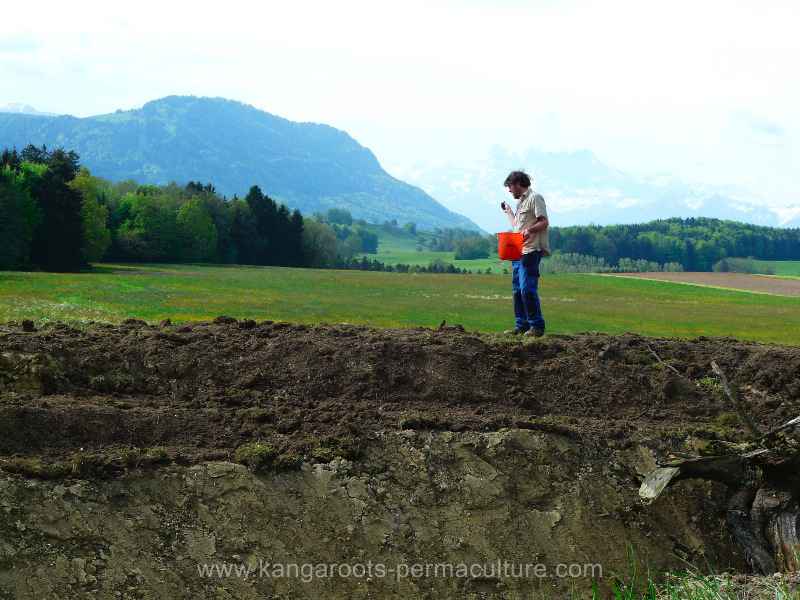
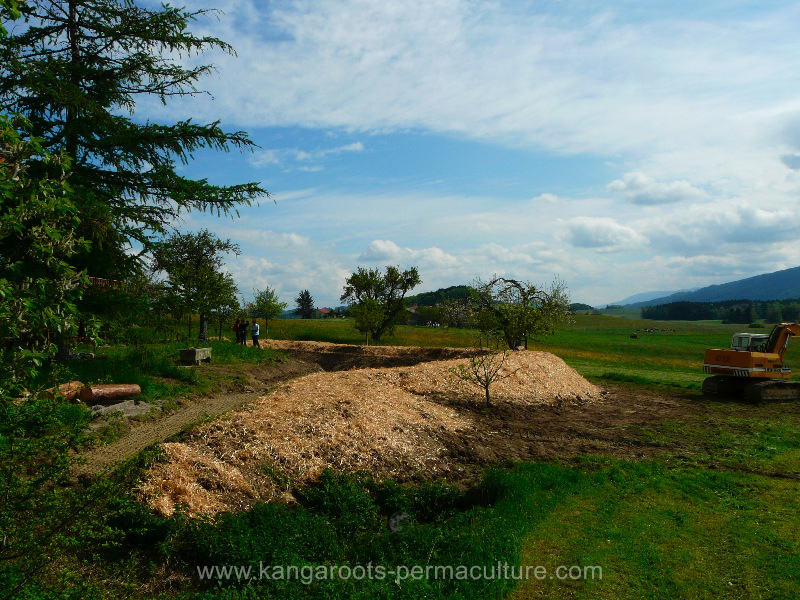
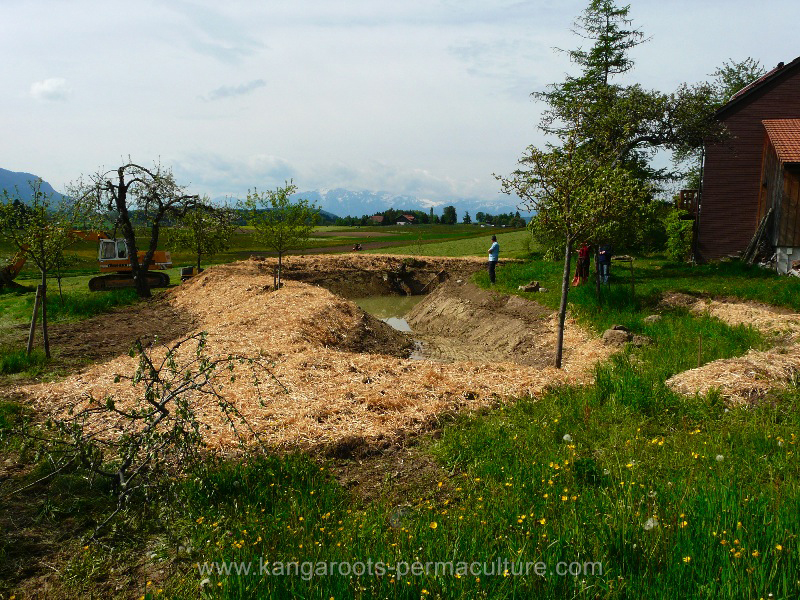
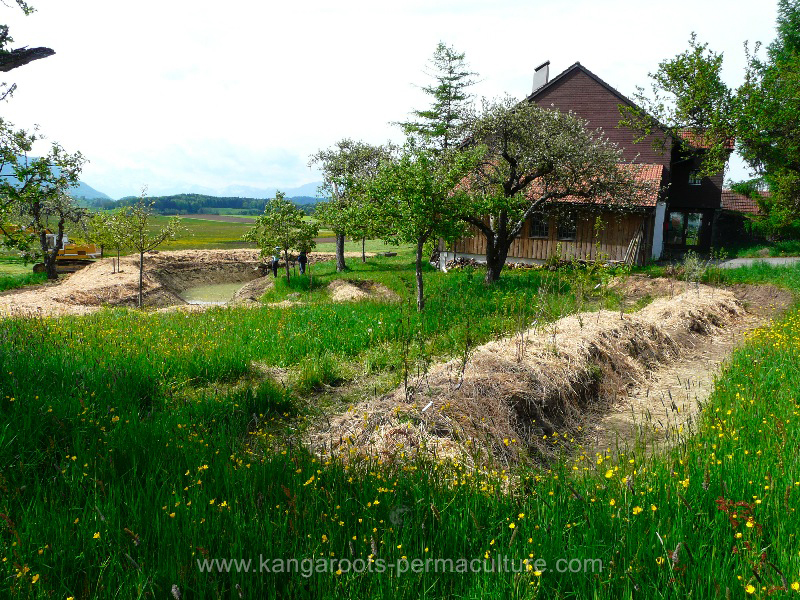


- A dam and 3 swales on a property in La Veveyse - Switzerland june 2011
(Work For Client)
After 10 months awaiting for state approval, the implementation of the first specific permaculture’s water harvesting earthwork project in Switzerland (at least in the french speaking part) took place in June 2011 in La Veveyse region.
(see photos below the text.)
The completed project demonstrates :
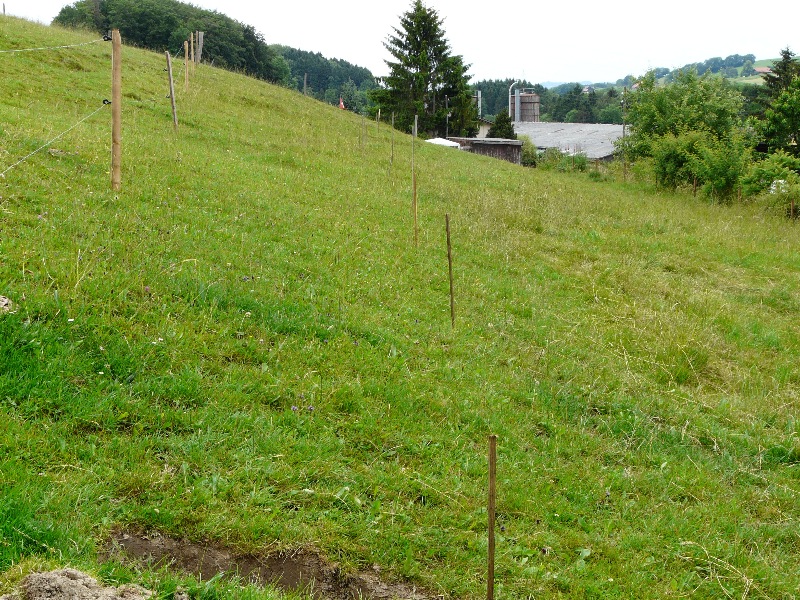
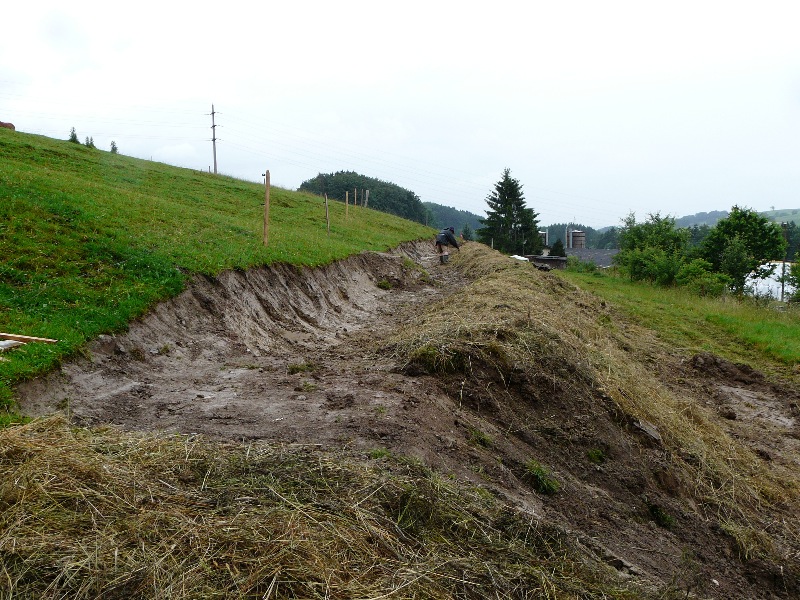
A rain water and water run off harvesting *swale (see in article above) for the filling of a dam. That swale is 42m long by 1m wide, it captures and diverts water into the dam. The swale being above the dam, the water spills over a rockery (guarding against erosion) into the dam.
The dam is a "contour dam" and has a water retention capacity of approx. 70’000lt. It is made exclusively from the clay soil dug out of the ground of the dam site. Its overflow spills into a second swale (this one being 25m long). The bottom of this swale sets the dam’s water level. The swale is also 1m wide, but has a flat bottom. Its water retention before spill is 0.10m.
Below that second swale is a third one of 23m in length by 1m width and 0.10m. spill height. Its overflow goes through the forest at the bottom of the property.
It took 2 days of earthwork with machinery (26t. excavator and a sheeproller). A few more days were needed for the entire planting out of the new system.
The majority of the planting that took place directly after the completed earthwork consisted of leguminous ground cover like lupin, vetch, luzern and various varieties of peas.
A dozen other non legume species were cast at the same time (carrot, radish, pumpkin, fennel, calendula, borage, mustard, etc…).
The shrubs and trees (fruit and flower) will be planted when the planting conditions become more favourable at the end of summer. (The present property is a ProSpecieRara registered butterfly reserve)
I would like to thank the land owners for their interest and their support of the project, that I hope, will initiate by demonstration the creation of many other such project across regions.
Click on photos to enlarge and read comments.


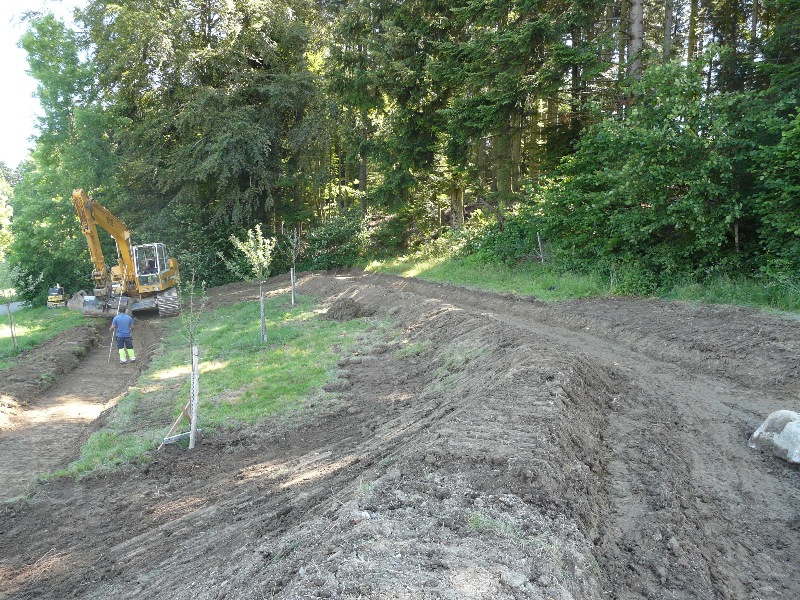
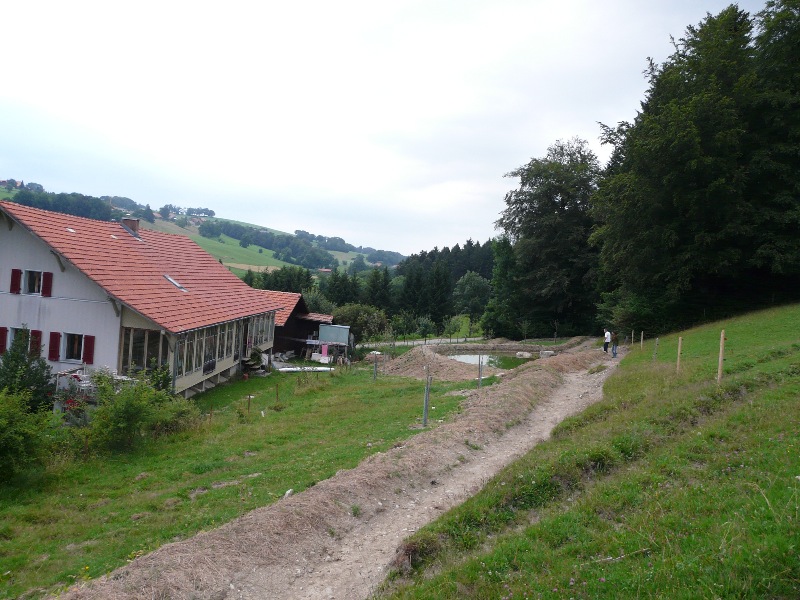
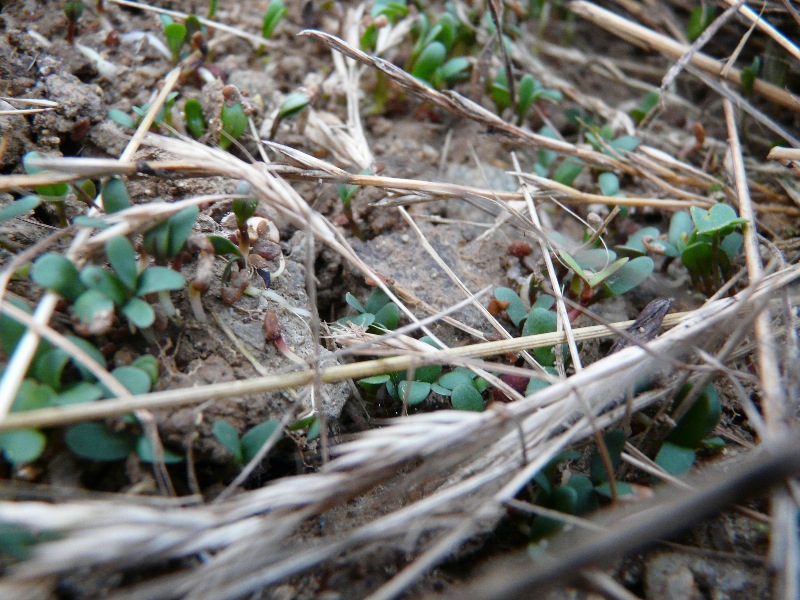
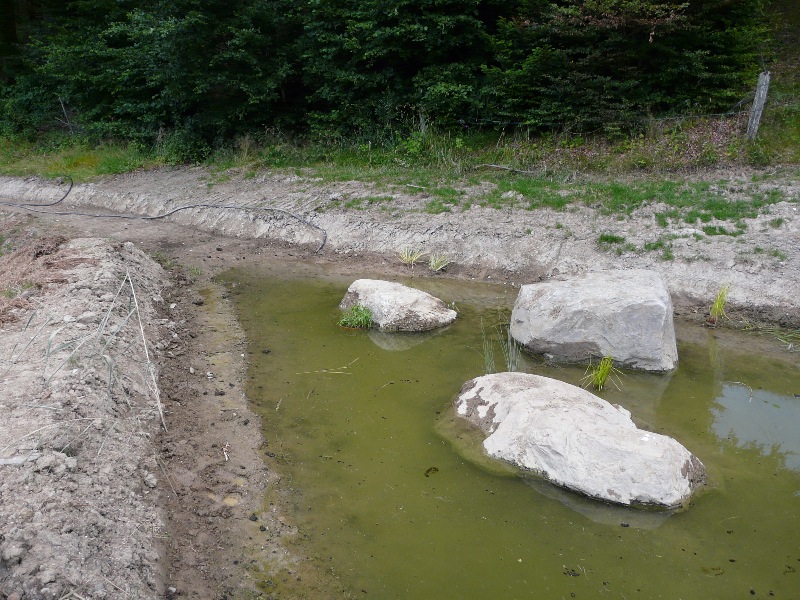

Landscaping - small carpark, access, plantations
- NSW Australia december 2008 (PP)